







What Does Rent Burdened Mean? Definition, Formula, and What to Do Next
If you have ever looked at your rent payment and wondered why there is so little money left for everything else, you are not alone.
Many renters are considered rent burdened, which means too much of their monthly income goes toward rent and basic housing costs. When rent takes up too much of your monthly income, it can make it harder to cover groceries, transportation, medical bills, savings, debt payments, and other everyday expenses.
Understanding what rent burdened means can help you better evaluate your financial situation, plan your budget, and look for tools or resources that may give you more flexibility.
Key Takeaways
- Rent burdened means spending more than 30% of your gross monthly income on rent and utilities.
- Severely rent burdened means spending more than 50% of your gross monthly income on rent and utilities.
- You can calculate your rent burden by dividing your monthly rent and utility costs by your gross monthly income, then multiplying by 100.
- The 30% rule is a helpful benchmark, but it does not tell the full story. Your location, debt, income stability, transportation costs, and other expenses also matter.
- If you are rent burdened, tools like budgeting, rent reporting, flexible rent payment options, financial coaching, and local assistance programs may help you create more financial flexibility.
What Does Rent Burdened Mean?
Rent burdened means that a household spends more than 30% of its gross monthly income on rent and utilities.
Gross income is the amount you earn before taxes and deductions. Utilities may include expenses like electricity, gas, water, sewer, and sometimes trash or heating costs, depending on how your housing costs are structured.
For example, if your household earns $4,000 per month before taxes, you would be considered rent burdened if your rent and utilities cost more than $1,200 per month.
The 30% benchmark is commonly used in housing policy and personal finance to measure whether housing costs may be putting pressure on a renter’s budget.
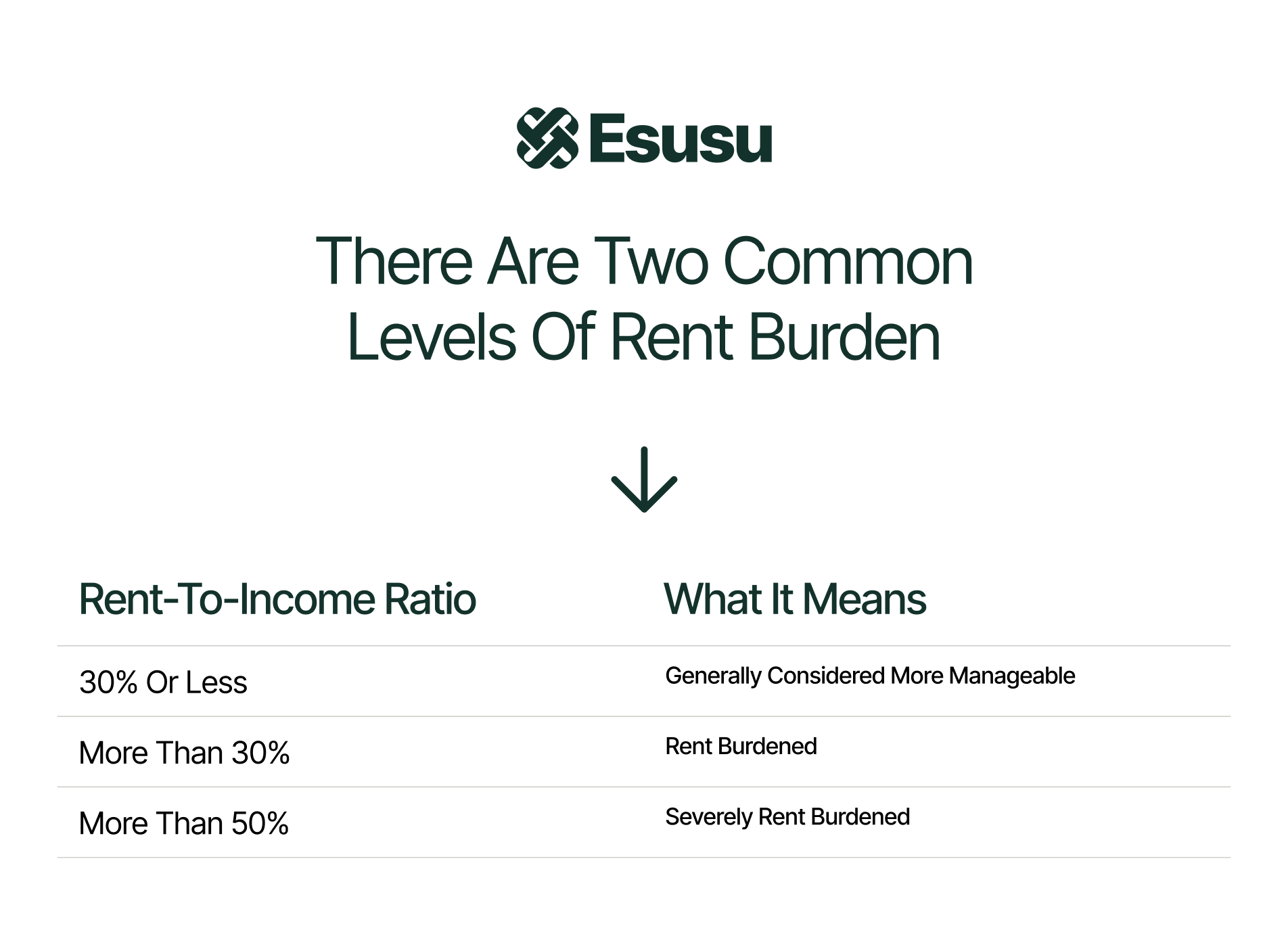
A renter who is rent burdened spends more than 30% of income on rent and utilities. A renter who is severely rent burdened spends more than 50%.
That difference matters because the more income goes toward rent, the less room there is for everything else. Someone who is severely rent burdened may have a much harder time covering emergencies, saving money, paying down debt, or staying current on bills.
How to Calculate Rent Burden
You can calculate your rent burden by dividing your monthly rent and utility costs by your gross monthly income
Rent burden formula:
Monthly rent and utilities ÷ Gross monthly income × 100 = Rent burden percentage
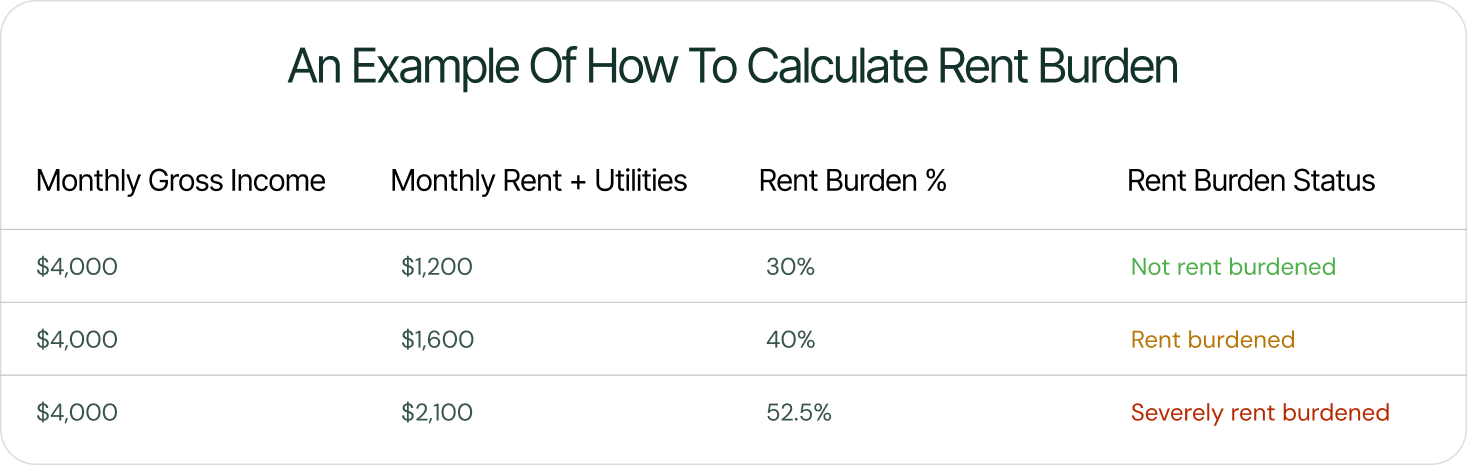
For example, if you earn $4,000 per month before taxes and spend $1,600 on rent and utilities, your rent burden is 40%.
Here’s what that means: for every dollar you earn before taxes, 40 cents goes toward housing costs. Since that is above the 30% rent burden threshold, you would generally be considered rent burdened.
This does not automatically mean your rent is unaffordable, but it does signal that housing may be taking up a large share of your monthly budget. After rent and utilities, you would have the remaining 60% of your gross income to cover groceries, transportation, insurance, debt payments, savings, healthcare, and other everyday expenses.
How Rent Burden Can Affect Your Monthly Budget
Rent burden is not just a budgeting term. It can affect your financial stability in real life.
When a large part of your income goes toward rent, it may be harder to:
- Build emergency savings
- Pay down credit card debt or loans
- Cover groceries, transportation, or healthcare
- Save for a security deposit or future move
- Prepare for homeownership
- Handle unexpected expenses
- Avoid late payments.
Rent burden can also create stress. Even renters who pay on time every month may feel financially stretched if rent leaves little room for the rest of their budget.
Being rent burdened does not mean you are bad with money. In many cases, it reflects broader housing affordability challenges, rising rents, stagnant wages, limited affordable housing supply, or unexpected changes in income.
Why the 30% Rule Is Not Perfect
The 30% rule is a useful benchmark, but it does not tell the whole story.
A household spending 35% of income on rent may still feel financially stable if they have low debt, strong savings, reliable transportation, and a high income. Another household spending 28% may still struggle if they have medical expenses, student loans, childcare costs, or unstable income.
The 30% rule also does not account for differences in cost of living. Renters in high-cost cities may spend more than 30% simply because affordable options are limited.
That is why rent burden should be used as a signal, not a judgment. It helps you understand whether housing costs may be taking up too much of your income, but your full financial picture matters too.
What to Do If You Are Rent Burdened
If you are rent burdened, the first step is understanding your numbers. From there, you can look for ways to reduce pressure, improve flexibility, or make your existing payments work harder for you.
.png)
Build a Budget That Reflects Your Reality
Start by looking at your full monthly income and expenses. Include rent, utilities, groceries, transportation, insurance, debt payments, subscriptions, savings, and any irregular costs.
A realistic budget can help you see where your money is going and identify which expenses are flexible. It can also help you plan for rent before the due date, especially if your income arrives on a different schedule.
The goal is not to make a perfect budget. The goal is to create a clear picture of what you can afford and where you may need more support.
Look for Flexibility Around Rent Day
For many renters, the issue is not only how much rent costs. It is also when rent is due.
If your rent is due before your paycheck arrives, even a manageable rent amount can create stress. Flexible rent payment tools may help some renters better align rent with their cash flow.
Depending on what is available through your property or platform, you may be able to split rent into smaller payments or access support that helps you stay current. Before using any rent payment option, make sure you understand the terms, timing, fees, eligibility requirements, and repayment responsibilities.
Turn On-Time Rent Payments Into Financial Progress
If you are already paying rent on time, rent reporting may help you turn those payments into part of your credit history.
Traditionally, rent payments have not always been included in credit reports. That means many renters make their largest monthly payment consistently without receiving credit for it.
With rent reporting, eligible on-time rent payments can be reported to credit bureaus. This may help renters build credit history over time without opening a new credit card or taking on new debt.
A stronger credit profile may help with future financial opportunities, such as applying for an apartment, qualifying for certain loans, or accessing better financial terms. Results can vary depending on your credit profile, reporting history, and how credit scoring models evaluate the information.
Stay on Top of Your Credit
If housing costs are stretching your budget, it is especially important to monitor your credit.
Late payments, high credit card balances, collections, or other credit issues can make financial stress harder to manage. Checking your credit information regularly can help you understand where you stand and catch potential errors early.
You can also review your credit reports for free through AnnualCreditReport.com. Free weekly online credit reports are available from the three major credit bureaus: Equifax, Experian, and TransUnion.
Find Ways to Save on Everyday Expenses
When rent takes up a large share of your income, even small savings can help.
Look for areas where you may be able to reduce costs, such as:
- Internet or phone plans
- Subscriptions
- Insurance
- Groceries
- Transportation
- Utility usage
- Debt repayment strategy.
Not every renter has expenses they can easily cut. But reviewing your recurring costs may help you find small opportunities to create more breathing room.
When to Look for Additional Help
If you are behind on rent, worried about eviction, or unable to cover basic expenses, consider looking for support as early as possible.
Depending on your situation and location, you may be able to explore:
- Local rent relief programs
- Nonprofit housing counseling
- Financial coaching
- Legal aid or tenant support organizations
- Utility assistance programs
- Community-based emergency support.
The earlier you ask for help, the more options you may have.
How Esusu Can Help Renters Create More Financial Flexibility
Esusu is designed to help renters build financial health through tools that connect rent, credit, and everyday financial support.
Depending on your property and eligibility, Esusu may help you:
- Report eligible on-time rent payments to the credit bureaus
- Track rent reporting progress
- Monitor credit score information
- Access financial coaching
- Explore savings and financial wellness resources
- Find rent relief or flexible rent payment options when available.
If rent is already your biggest monthly payment, rent reporting can help eligible on-time payments become part of your credit history, so the money you already spend on housing may also support your financial future.
FAQ About Being Rent Burdened
Make Rent Work Harder for Your Financial Future
Being rent burdened can feel overwhelming, but understanding your rent-to-income ratio is a helpful first step. Once you know where you stand, you can look for ways to manage your budget, access support, and make your on-time rent payments count.
If your property offers Esusu, you may be able to use your rent payments to help build credit history, access financial tools, and create more flexibility over time.


.png)

